

Article: From Flowers to Fragrance: The Living Connection Between Ceremony Flowers and Ceremony In Bloom
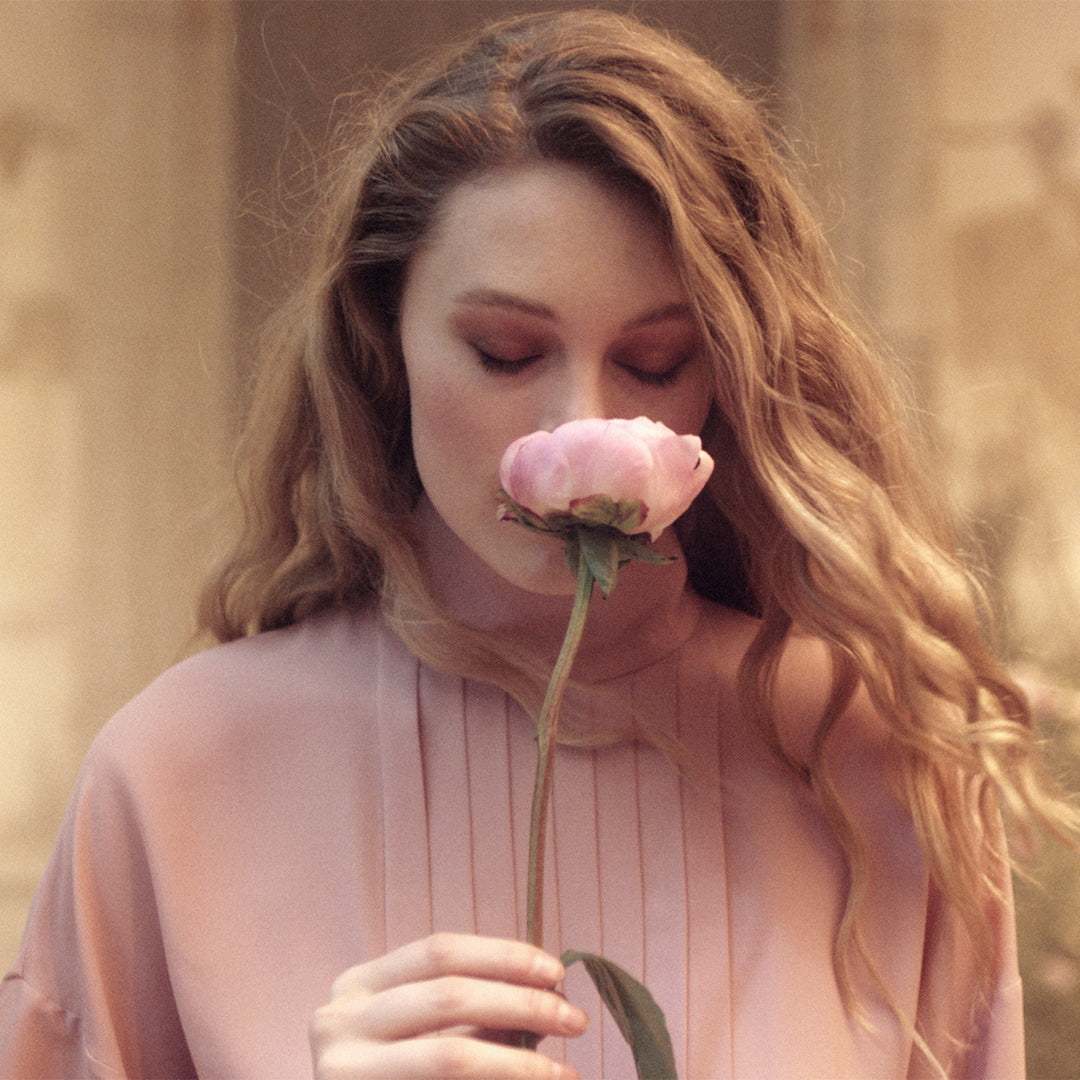
From Flowers to Fragrance: The Living Connection Between Ceremony Flowers and Ceremony In Bloom
Before there was a single candle, there were flowers.
Before there was a fragrance collection, there was a florist — working in Istanbul, building arrangements, staging events, learning the deep grammar of scent that exists in every bloom before it is cut and before it is named.
This is the story of how one world became another. And why, even now, they have never really been apart.
The Language of Flowers
There is a discipline to working with flowers that has little to do with aesthetics and everything to do with understanding how living things communicate through scent.
A peony in the morning smells different from a peony in the afternoon. A rose cut from the garden carries something that a rose delivered in a box does not. Jasmine in a closed room is not the same as jasmine in a garden with wind moving through it.
Ceremony Flowers was built on this understanding. For 25 years — from 1994, when it was founded in Istanbul, through to the early 2000s when it settled in Bebek on the Bosphorus — the atelier developed a relationship with flowers that went far beyond arrangement. It was a relationship with scent itself: how it behaves, how it changes, how it lingers, how it tells the truth about a space.
That education was quiet, cumulative, and irreplaceable.
What Flowers Taught About Fragrance
Every principle that guides Ceremony In Bloom's fragrance compositions was learned first through flowers.
The note pyramid — top, heart, base — is not a perfumer's invention. It is a description of how every flower actually behaves. The first impression of a bloom when you bring it close is not its whole story. Give it time. The deeper character emerges slowly, as the lighter molecules dissipate and what remains is the true heart of the scent. A jasmine blossom smells different in the first five seconds than it does after five minutes on warm skin. This is the note pyramid in nature, long before it became a principle of perfumery.
Balance and layering — the discipline of building an arrangement that is neither too heavy nor too thin, that has foreground and depth, that holds together as a composition — translates directly into fragrance formulation. A scent with only top notes has no staying power. A scent with only base notes has no life. The art is in knowing what proportion of each creates something complete.
Occasion and setting — Ceremony Flowers spent decades placing the right bloom in the right space for the right moment. A wedding. A dinner. A hotel lobby. A private room. The understanding that scent must serve a context, that it must match the emotional register of the occasion, is exactly what shapes our gifting pairings and ritual recommendations today.
The discipline of restraint — perhaps the most important lesson of all. In flowers, more is rarely more. The most powerful arrangements are often the most considered — a single stem, three blooms, a studied absence. Ceremony In Bloom's design philosophy carries this directly: not more fragrance, but the right fragrance. Not more products, but the right products, made properly.
2019: The Transition That Was Not Really a Transition
When Ceremony In Bloom launched in 2019, it was described as an expansion. In practice, it felt more like a translation.
The vocabulary was already there. The sensory intelligence — developed over 25 years of working with nature's most expressive aromatic materials — was already deeply embedded in the brand's DNA. What changed was the format: from cut flowers, which are beautiful and finite, to home fragrance, which is considered and lasting.
A candle does what a flower arrangement cannot: it stays. It continues working in a room when the occasion is over, when the guests have left, when the morning comes. It carries the ceremony into the everyday.
A reed diffuser does what even a candle cannot: it works without being lit, without being watched, without requiring anything of you. It is presence without demand — scent as a kind of hospitality that never sleeps.
This was the gap that Ceremony In Bloom was created to fill. Not to replace flowers — Ceremony Flowers continues, and always will — but to extend the sensory world that flowers had built into something that could live in a home permanently.
How the Connection Continues
The relationship between Ceremony Flowers and Ceremony In Bloom is not historical. It is ongoing.
Every new fragrance we develop is considered first through the lens of floral artistry — which blooms carry this idea, which botanical families sit at its heart, which natural materials from the world of flowers give it honesty and depth.
Wild Fig is rooted in the fig trees that grow along the Bosphorus coastline — the same landscape that supplies the botanical world that Ceremony Flowers has worked with for three decades. Regal Oud carries the Ottoman rose gardens that have shaped Istanbul's relationship with fragrant plants since the sixteenth century. Fresh Bouquet is, directly and literally, the smell of a florist's studio before the day begins.
When you light a Ceremony In Bloom candle or draw the reeds of a diffuser, you are — in a small but genuine way — carrying forward a 30-year conversation with the natural world. One that began in flowers and has not finished yet.
The Ceremony, Continued
Flowers have always been ceremony. They mark the moments that matter — birth, love, loss, celebration, gratitude. They are placed with intention. They are chosen for their meaning as much as their beauty.
Ceremony In Bloom carries that intention into the home. Each scent was built with the same seriousness that Ceremony Flowers brought to each arrangement: what does this moment call for, what does this space need, what will make the person who receives this feel that something genuinely beautiful has been considered on their behalf.
From petals to perfume. From flowers to fragrance. From one ceremony to another.
The story is the same. Only the vessel has changed.